

If you are researching Botox® vs Dysport® in New York, you have already taken an important step: you know you want to address signs of aging and are narrowing down which neurotoxin treatment fits your goals. Both Botox and Dysport are FDA-approved cosmetic treatments based on botulinum toxin type A, and both work by temporarily relaxing the facial muscles responsible for dynamic wrinkles like frown lines, forehead lines, and crow’s feet. This page walks through the key differences between these two treatments to help you make an informed decision along with Dr. Jessica Krant. To discuss which option is right for you, contact Art of Dermatology at the Laser & Skin Surgery Center of New York at 212.488.5599 or through the online form.
What Is Botox®?
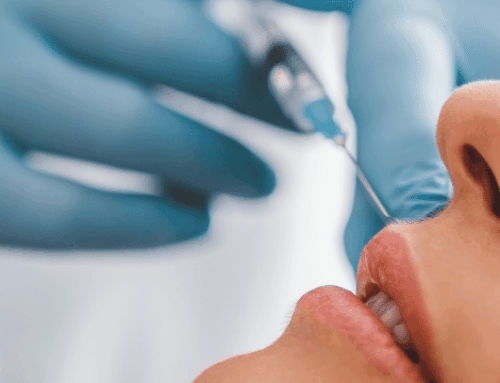
Botox (onabotulinumtoxinA) is an injectable treatment FDA-approved for moderate to severe glabellar lines, crow’s feet, and forehead lines in adults—but many off-label uses have become increasingly popular. Botox works by blocking nerve signals to targeted muscles, temporarily reducing muscle contractions that cause dynamic wrinkles. During a Botox treatment, small amounts are injected into specific treatment areas using a fine needle. Most patients find the experience well-tolerated, with sessions typically completed in under 10 minutes. Botox results generally appear within a few days and can last three to four months for most patients, though individual results may vary. Botox injections have a well-established safety profile developed over decades of clinical use.
What Is Dysport®?
Dysport (abobotulinumtoxinA) is an injectable treatment FDA-approved for moderate to severe glabellar lines, also known as frown lines between the brows–and, like Botox, increasingly used off-label for other areas by experienced board-certified dermatologists like Dr. Krant. Like Botox, Dysport injections work by blocking nerve signals to facial muscles, temporarily relaxing muscle movement in the treatment area to reduce the appearance of vertical lines and forehead wrinkles. Dysport has a slightly different molecular structure and formulation compared to Botox, which influences how each behaves after injection. Dysport treatments are similarly well-tolerated, with a comparable session experience. Results from Dysport may appear within a few hours to two days for some patients, and Dysport results typically last three to four months, with individual variation.
Key Differences Between Botox and Dysport
Molecular Structure and Formulation
Both Botox and Dysport contain botulinum toxin type A as the active ingredient, but they differ in molecular structure and protein content. Dysport has a smaller molecular structure and a lower concentration of complexing proteins, which can affect how each product diffuses in tissue after injection. Botox has a larger molecular structure with a more localized spread in the treatment area. Neither formulation is inherently superior; the difference in molecular structure simply means each may be better suited to specific facial anatomy or treatment areas. Dr. Krant’s familiarity with both products is essential for achieving natural-looking results.
FDA Approval and Approved Treatment Areas
Both Botox and Dysport carry FDA approval for treating moderate to severe glabellar lines in adults. Botox also holds FDA approval for crow’s feet and forehead lines, giving it a broader range of FDA-approved cosmetic applications. Dysport’s FDA approval focuses on glabellar lines, though your dermatologist may discuss additional cosmetic uses during a consultation. Understanding each product’s specific FDA approval helps set realistic expectations and ensures treatment aligns with established clinical guidelines.
Onset of Results
One noticeable difference between Botox and Dysport is how quickly results appear. Many patients report that Dysport results can become visible within a few hours to two days after treatment. Botox results typically appear within three to seven days. For patients who want a noticeable difference ahead of a specific event, the faster onset of Dysport may be worth discussing with your board-certified dermatologist. That said, individual results vary, and neither timeline is guaranteed for every patient.
Duration of Results
Botox and Dysport both provide wrinkle reduction lasting approximately three to four months for most patients. Some patients report subtle differences in duration between the two treatments, but clinical evidence does not consistently show one lasting significantly longer than the other. Factors such as metabolism, treatment area, and facial anatomy all influence how long either product maintains its effect. Both treatments require additional treatments over time to sustain smooth lines and a refreshed appearance.
Dosing and Units
Botox and Dysport are measured in units, but these units are not interchangeable. Dysport typically requires more units per treatment area than Botox to achieve a comparable result, because the two products have different potencies. This means comparing treatments purely by unit price is not an accurate reflection of overall cost. Both treatments are priced based on individual treatment plans, and your dermatologist will determine the appropriate dosing for your facial anatomy and desired wrinkle reduction during your consultation.
Side Effects and Downtime
Both Botox and Dysport share a similar side effect profile. Common side effects for both include mild swelling, bruising, redness, and tenderness at injection sites. Eyelid drooping and muscle weakness are rare but possible with either treatment, with risk greatly decreased by seeing only experienced board-certified dermatologists like Dr. Jessica Krant for treatment. Allergic reaction is uncommon but should be discussed with your dermatologist before treatment. As with any medical procedure, risks vary by individual. Most patients experience minimal downtime and return to regular activities shortly after treatment, though Dr. Krant typically recommends avoiding strenuous exercise for a period following injections. She will discuss the complete risk profile for both options during your consultation.
Ideal Candidate Profile
Candidates for both Botox and Dysport are generally adults who want to reduce the appearance of dynamic wrinkles caused by repeated facial expressions. Botox may be preferred when treating moderate to severe frown lines or crow’s feet in areas where a more precise, localized result is desired. Dysport may be considered for patients seeking a potentially faster onset or for certain areas where broader diffusion may be appropriate. Medical conditions, skin characteristics, and personal preference all factor into determining the right treatment plan. Neither option is universally better; candidacy depends on individual facial anatomy and goals.
How to Choose Between Botox and Dysport
Deciding between Botox and Dysport is not a one-size-fits-all determination. The right choice depends on your facial anatomy, the specific wrinkles you want to address, your timeline for results, and your individual preferences. For example, if you are treating crow’s feet or forehead wrinkles alongside frown lines, Botox’s broader FDA approval may be relevant to your treatment plan. If a faster onset matters for your schedule, comparing Dysport’s typical timeline to Botox may influence your decision.
Both treatments are delivered as cosmetic injections and pair well with dermal fillers and other cosmetic treatments as part of a comprehensive anti-aging approach. A board-certified dermatologist evaluates these factors together to recommend the option most aligned with your goals. Dr. Krant brings specialized experience in cosmetic, laser, surgical, and medical dermatology to every consultation and takes a patient-first approach to treatment planning. Schedule a consultation with Dr. Krant at Art of Dermatology at the Laser & Skin Surgery Center of New York to discuss which treatment aligns with your goals. Call 212.488.5599 or contact us online.
Why Choose Dr. Krant for Botox or Dysport in New York
Dr. Jessica Krant, MD, MPH, is a board-certified dermatologist with specialized experience in cosmetic injectables, laser treatments, and medical dermatology, serving patients throughout New York, NY, including Midtown Manhattan, Murray Hill, and the surrounding boroughs. Dr. Krant is a Fellow of the American Academy of Dermatology and an AMA Delegate for the American Society for Dermatologic Surgery, with recognition from Castle Connolly, New York Magazine, and New York SuperDoctors. As an Assistant Clinical Professor of Dermatology with 24+ years of teaching experience, Dr. Krant brings clinical depth and an eye for natural-looking results to every treatment. Her approach to Botox and Dysport is individualized: she evaluates your facial anatomy, goals, and medical history to recommend the treatment plan that best serves your needs, never a predetermined preference for one product over another.
Frequently Asked Questions About Botox and Dysport
What is the difference between Botox and Dysport?
The main difference between Botox and Dysport lies in their molecular structure, formulation, and FDA-approved treatment areas. Both contain botulinum toxin type A and work by blocking nerve signals to reduce dynamic wrinkles, but Dysport has a smaller molecular structure that may diffuse slightly more broadly, while Botox is more localized. Botox holds FDA approval for glabellar lines, crow’s feet, and forehead lines, while Dysport is FDA-approved specifically for moderate to severe glabellar lines. Both can be used strategically off-label for other areas. A consultation helps determine which is better suited to your facial anatomy and goals.
Which lasts longer, Botox or Dysport?
Botox results typically last approximately three to four months, and Dysport results generally last a similar duration. Most patients do not experience a significant difference in longevity between the two treatments, though individual results may vary based on metabolism, treatment area, and facial anatomy. Both treatments require additional treatments over time to maintain wrinkle reduction.
Is Botox or Dysport better for frown lines?
Whether Botox or Dysport is better for frown lines depends on your individual facial anatomy, the severity of your glabellar lines, and your dermatologist’s assessment. Both are FDA-approved for treating moderate to severe frown lines and can deliver visible improvement. A board-certified dermatologist like Dr. Krant evaluates these factors to recommend the right treatment plan for you.
Can I switch from Botox to Dysport or vice versa?
Yes, many patients switch between Botox and Dysport over time, and both treatments can be discussed at any follow-up consultation. Switching is common and generally well-tolerated, though dosing adjustments are needed since units are not interchangeable between the two products. Dr. Krant will guide you through any transition based on your treatment history and current goals.
Does Botox or Dysport have less downtime?
Both Botox and Dysport involve minimal downtime for most patients. Common post-treatment recommendations for both include avoiding strenuous exercise for a short period and refraining from rubbing the treatment area. Mild swelling or bruising at injection sites may occur with either product and typically resolves within a few days. Individual recovery varies, and Dr. Krant will give you specific aftercare guidance.
Can Botox and Dysport be combined with dermal fillers?
Yes, both Botox and Dysport can be used alongside dermal fillers as part of a comprehensive cosmetic treatment plan. Neurotoxins like Botox and Dysport address dynamic wrinkles caused by muscle movement, while dermal fillers restore volume and smooth static lines. Combining these treatments is common and can contribute to a more refreshed, youthful appearance. Dr. Krant discusses combination approaches during consultation based on your individual goals.
How much does Botox vs Dysport cost in New York?
The cost of both Botox and Dysport in New York varies based on the treatment area, the number of units required, and your individual treatment plan. Because Dysport and Botox use different unit measurements, comparing per-unit pricing directly is not a reliable method. Contact Art of Dermatology at the Laser & Skin Surgery Center of New York at 212.488.5599 or online to discuss personalized pricing during your consultation.
Am I a good candidate for Botox or Dysport?
Most adults in good general health who want to reduce the appearance of dynamic wrinkles caused by facial expressions may be candidates for Botox or Dysport treatments. Medical conditions, current medications, and pregnancy or breastfeeding status can affect candidacy for either treatment. A consultation with Dr. Krant will include a full review of your health history and aesthetic goals to determine which option is appropriate for you.
Is Botox or Dysport more natural-looking?
Natural-looking results from both Botox and Dysport depend primarily on the skill of the injector, accurate assessment of facial anatomy, and appropriate dosing, rather than the product itself. Both treatments, when administered by an experienced board-certified dermatologist, can achieve subtle, natural-looking results that preserve facial expressions while reducing the appearance of frown lines and forehead wrinkles. Individual results may vary.
Deciding between Botox vs Dysport in New York is a personal decision that deserves individualized guidance. Dr. Jessica Krant at Art of Dermatology at the Laser & Skin Surgery Center of New York in New York, NY, offers consultations for both cosmetic treatments, taking time to understand your anatomy, goals, and lifestyle before recommending a treatment plan. Call 212.488.5599 or contact Dr. Krant online to schedule your consultation today.

Jessica Krant, M.D., MPH, is a board-certified dermatologist with specialized experience in cosmetic, laser, surgical, and medical dermatology, but above all, Dr. Krant is most proud to be a caring, comprehensive physician who takes the time to listen and send her patients home with a smile.









Leave A Comment